Commercial Waste Radlett: Recycling and Sustainability
 Commercial Waste Radlett takes a pragmatic, eco-first approach to managing business refuse across Hertsmere and the surrounding boroughs. In the busy Radlett commercial waste landscape our aim is simple: reduce landfill, increase reuse and make the eco-friendly waste disposal area the default for local businesses. We describe here how Radlett commercial waste operations support a sustainable rubbish area, incorporate borough approaches to waste separation, and align with municipal recycling ambitions.
Our programme supports the boroughs' separation schemes — glass, paper, card, plastics, food and residual streams — by offering tailored collections and clear on-site segregation advice. This improves sorting before transfer and complements household policies in nearby wards. We also explain how local transfer stations and partner networks channel recyclables into established processing streams rather than landfill, ensuring materials re-enter the economy.
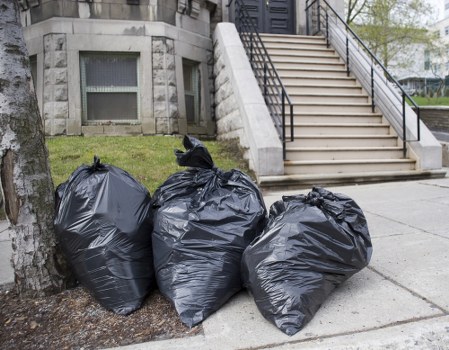 Why sustainability matters: commercial rubbish Radlett operations influence local emissions, resource use and community wellbeing. By prioritising reuse and recycling we divert high volumes of waste from disposal and support the circular economy. Our sustainability narrative emphasises measurable targets and operational change: route optimisation, low-carbon vehicles, commercial reuse partnerships and transparent reporting on recycling performance.
Targets and measurable goals
Recycling percentage target: we are committed to achieving a 70% recycling rate for all managed commercial waste by 2030, with interim milestones (55% by 2026, 63% by 2028). This target reflects the ambition of eco-friendly waste disposal Radlett stakeholders and aligns with regional environmental goals. Progress is tracked monthly and presented in concise sustainability summaries so customers understand how their waste contributes to wider borough recycling targets.
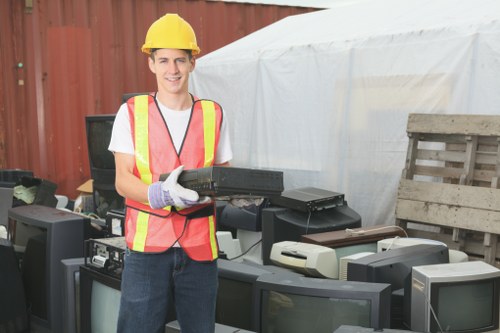
Low-carbon fleet and logistics
Our fleet includes a growing number of low-carbon vans and hybrids to lower emissions from collection rounds. Vehicles are selected for payload efficiency and minimal urban impact — electric vans for short-range collections and Euro 6 hybrids on heavier routes. We also use telematics and route optimisation software to reduce mileage and idling time. Together these measures make the Radlett commercial waste service a leader in low-emission business collections.
We work closely with local transfer stations to ensure materials are processed correctly. Collections from Radlett feed designated transfer facilities in Hertfordshire and neighbouring boroughs, where waste is sorted for recycling, anaerobic digestion (food waste), or responsibly prepared for reuse. Mentioning transfer stations underlines our commitment to transparent logistics and confirms that materials do not simply go to landfill but enter the appropriate treatment streams.
Partnerships with charities and reuse organisations are central to a thriving sustainable rubbish area. We liaise with furniture and textile re-use charities, food redistribution networks and local community groups to redirect usable items. Examples include donations of office furniture to local hospices and redistribution of surplus food to community kitchens. These partnerships reduce waste, support vulnerable residents and extend the life of many materials.
Practical recycling activity in the area: businesses in Radlett are encouraged to separate dry mixed recycling, food waste, and paper at source. Common commercial recycling activity includes cardboard baling at retail sites, segregated glass collections for hospitality venues, and consolidated plastics recycling across industrial estates. These practices reflect borough-level collection methods and help ensure high-quality recyclable streams.
To support businesses we provide clear on-site guidance and signage, targeted audits, and training for staff to improve capture rates. Commercial waste Radlett advisers review waste streams and recommend containers, collection frequency and simple behavioural changes that increase recycling yields. Small changes — consolidating cardboard between collections or introducing a separate food waste bin — can quickly lift recycling percentages.
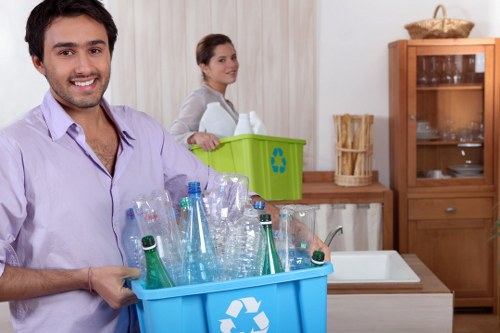 Community and corporate responsibility: being part of the Radlett commercial rubbish ecosystem means contributing to local sustainability. Our programmes encourage companies to adopt circular-economy practices like product take-back, repair-friendly procurement and reuse-first approaches. Corporate clients are supported to set internal recycling KPIs that feed into their broader environmental, social and governance (ESG) reporting.
 Monitoring and continuous improvement: performance data is reviewed regularly and used to refine collection networks, target areas with low recycling capture and scale up best practices. We publish annual summaries of diversion rates and improvements, and work with borough waste teams to ensure business-level measures complement household recycling efforts. Together, local businesses and the Radlett commercial waste service can create a resilient, low-carbon, and genuinely sustainable rubbish area for the whole community.
