Commercial Waste Radlett — Health & Safety Policy
Commercial Waste Radlett is committed to protecting the health, safety and welfare of all employees, contractors and the public affected by our commercial waste services in Radlett and the surrounding service area. This policy sets out the principles, responsibilities and operational standards that apply to all activities including commercial rubbish collection Radlett, skip hire, recycling and transfer operations. We will take all reasonably practicable steps to prevent injury, occupational ill health and environmental harm while delivering reliable rubbish company service area operations.Scope and application
This policy applies to all commercial waste handling, transport and disposal activities undertaken by the company or its authorised agents. It covers depot operations, vehicle-based collections, walk-in trade customers, and work on customer premises. The policy is relevant to permanent, temporary and agency staff, subcontractors and visitors. It is designed to align with statutory duties while remaining clear and concise for operational staff and supervisors.
Policy objectives
The objectives are to: reduce risk through pro-active management; ensure safe systems of work; provide appropriate personal protective equipment and training; maintain vehicles and plant in a safe condition; and ensure that commercial rubbish services Radlett operate without harm to people or property. The company will measure performance through audits, incident records and inspections, and will drive continuous improvement.Accountability is central: senior management have overall responsibility for health and safety policy and resource allocation, while operational managers and supervisors implement safe systems and monitor compliance. All employees are required to take reasonable care of their own safety and that of others and to cooperate with any measures introduced to comply with this policy. Contractors and subcontractors must demonstrate competent safety arrangements before undertaking work on behalf of the company.
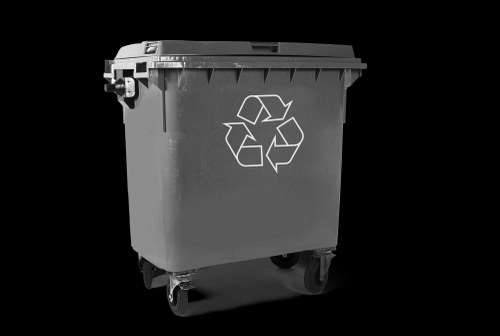 Risk assessment and control are mandatory. We will identify hazards associated with waste streams, vehicle movements, manual handling, sharps and hazardous materials, and implement proportionate controls. Controls will include segregation of waste types, secure containment, appropriate labelling, and pre-collection site assessments for unusual risks. Assessments will be reviewed routinely and whenever operations or materials change.
Training and competence are essential. All staff engaged in commercial waste collection and refuse handling will receive job-specific instruction, refresher training and documented competence checks. Training will cover safe lifting techniques, vehicle safety and loading, use of mechanical lifting aids, spillage management, traffic interaction and working at customer premises. Records of training will be maintained and used to plan additional development where gaps are identified.
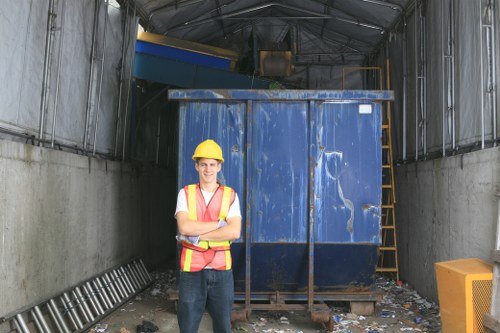
PPE, vehicles and plant: The company will provide and enforce the use of appropriate personal protective equipment such as gloves, hi-vis clothing, safety footwear and eye protection. Vehicles and mechanical handling equipment will be maintained under a planned maintenance regime and inspected daily. Where mechanical or automated systems are used for loading or compacting waste, operators will be trained and safety interlocks will be functional. A clear vehicle safe-use policy will cover reversing supervision, secure load restraint and driver welfare.
 Hazardous and specialist wastes: Where wastes present chemical, biological or physical hazards the company will adopt segregation, specialist containment and disposal routes consistent with regulatory expectations. Procedures will be in place for the handling and reporting of asbestos, contaminated materials, sharps and liquids. Waste documentation must accompany specialist consignments and any carrier documentation will be accurate and retained for audit.
 Incident response, reporting and investigation: All incidents, near misses and safety observations must be reported promptly. An investigation process will establish root causes and result in corrective actions. Emergency arrangements, including spill response, first aid provision and liaison with emergency services, will be rehearsed and available at all sites. Lessons learned will be communicated to the workforce and incorporated into revised risk assessments and procedures.
Monitoring, review and continual improvement: The company will carry out regular site and vehicle inspections, safety audits and performance reviews. Key performance indicators such as incident frequency, training completion and corrective action closure rates will be tracked by management. This policy will be reviewed at least annually or sooner following significant change, incident or legislative update. Continuous improvement is expected from all levels of the organisation.
Contracted partners and suppliers will be assessed for safety capability and required to comply with the standards set out in this policy. Compliance checks will form part of procurement and contractor management to ensure that external providers of skips, haulage, recycling and disposal services meet equivalent safety and environmental standards.
By maintaining clear responsibilities, robust risk control, competent people and reliable equipment, Radlett commercial rubbish services will provide safe, compliant and efficient commercial waste collection and management. This policy is supported by operational procedures, training records and documented assessments that together form the company health and safety system for commercial waste operations in the service area.
